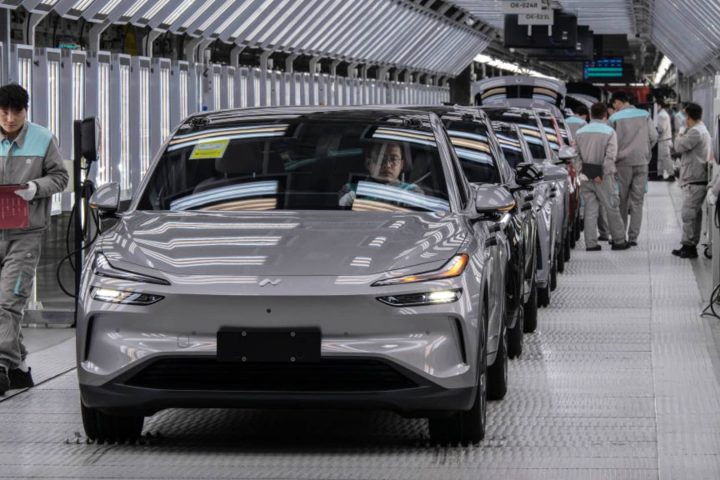
Uber Technologies (UBER.N) and Lyft (LYFT.O) are teaming up with Chinese tech giant Baidu to test driverless taxis in the UK starting in 2026. This partnership marks a significant step in the global race to commercialize robotaxis, positioning London as a key proving ground for large-scale robotaxi services in Europe.
Both Uber and Lyft are accelerating their autonomous vehicle rollouts through partnerships, a strategy that reflects their shift away from in-house development of autonomous vehicles. Lyft plans to deploy Baidu’s self-driving cars in the UK and Germany, pending regulatory approval. The collaboration highlights the growing momentum of global robotaxi rollouts, as companies look to bring autonomous vehicles to urban markets.
Baidu, along with WeRide (WRD.O), has already launched operations in the Middle East and Switzerland, signaling its increasing presence in the autonomous vehicle sector. Meanwhile, Alphabet’s Waymo announced plans to begin testing its own autonomous vehicles in London this month, further adding to the competition in the robotaxi space.
Robotaxis promise to provide safer, greener, and more cost-efficient transportation. However, profitability remains uncertain. Companies like Pony.ai (PONY.O) and WeRide are still operating at a loss, and analysts warn that the high cost of maintaining autonomous vehicle fleets could pressure the margins of ride-hailing platforms like Uber and Lyft.
In response to these challenges, analysts suggest that hybrid models—mixing robotaxis with human drivers—may be the most viable approach. This model could help manage demand peaks and optimize pricing.
In July, Lyft also expanded its footprint beyond North America, acquiring the European taxi app FreeNow from BMW and Mercedes-Benz for $200 million. This acquisition gives Lyft access to nine European countries, further solidifying its position as a key player in the global ride-hailing market.