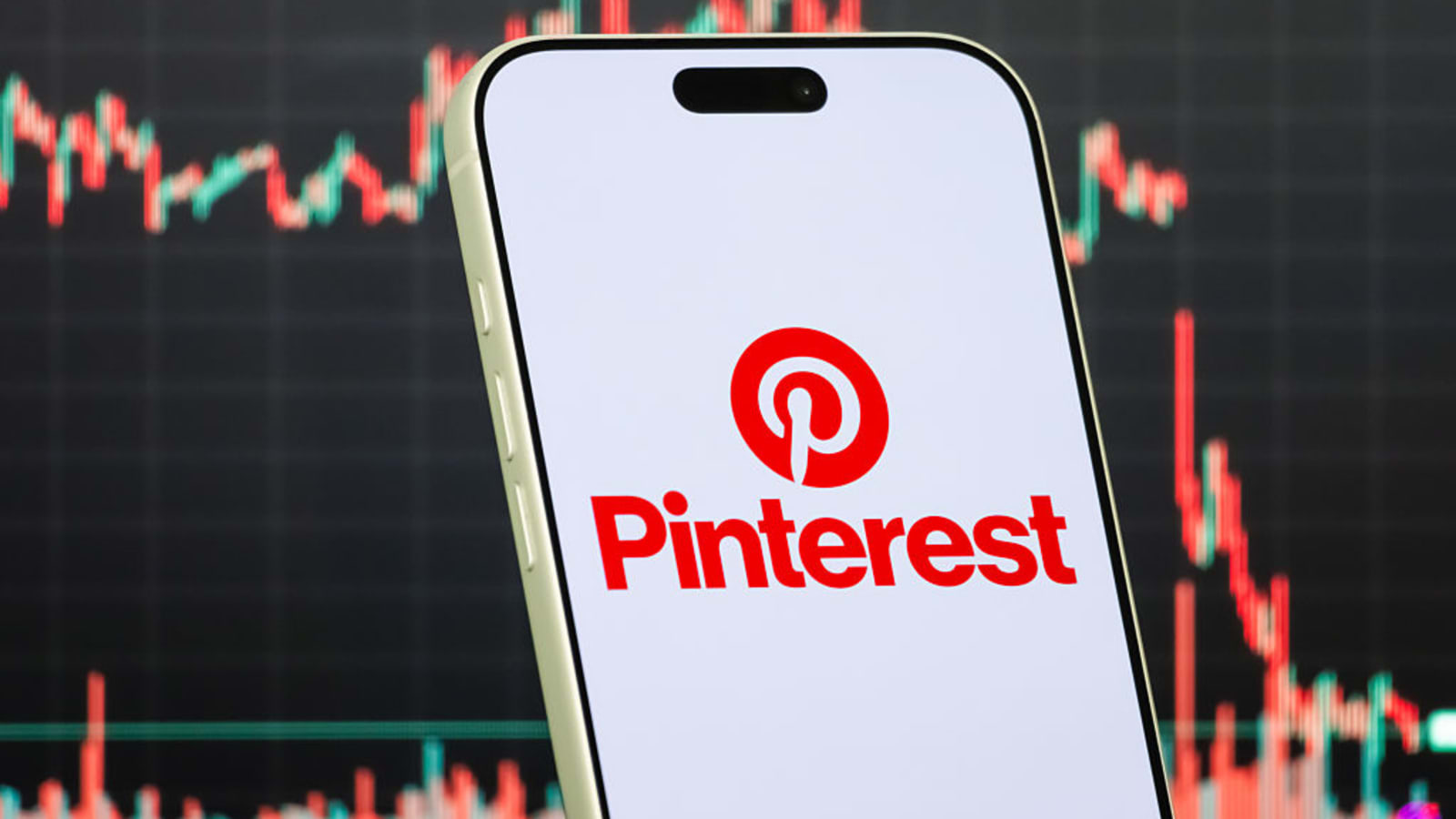
Pinterest’s stock saw a dramatic 20% drop on Friday following the release of disappointing fourth-quarter earnings. The social media company cited tariffs and the resulting impact on large retail advertisers as the main drivers of its struggles. With revenue falling short of expectations and net income plunging, Pinterest is facing a significant challenge in maintaining its revenue growth as the effects of global trade tensions take their toll.
For the fourth quarter, Pinterest reported a revenue of $1.32 billion, just under the expected $1.33 billion. The company also revealed a staggering 85% drop in net income, from $1.85 billion in the previous year to only $277 million. Additionally, adjusted EBITDA came in below projections, registering $541.5 million against the anticipated $550 million. This poor financial performance reflects the growing impact of external economic factors, particularly tariffs, which have affected Pinterest’s ability to generate revenue from advertisers.
Tariffs Take a Big Toll on Pinterest’s Advertising Business
The core issue highlighted by Pinterest in its earnings report is the reduction in advertising spend from large retailers, which make up a significant portion of Pinterest’s advertising base. CEO Bill Ready attributed this decline to the impact of tariffs on the cost structures of major retailers, leading to their pullback on advertising investments. The platform’s high concentration of retail advertisers, compared to some of its competitors, left Pinterest more vulnerable to this disruption.
In his comments, Ready pointed out that Pinterest’s reliance on large retailers has meant that the company has felt the effects of the tariff-induced slowdown more acutely than its peers. “Our high mix of large retailers relative to some of our peers has resulted in us feeling more of an impact,” said Ready. This warning signals to investors that Pinterest’s business model, heavily dependent on advertising revenue from large retailers, may face ongoing challenges unless it can diversify its advertiser base.
The impact of tariffs and the subsequent drop in advertising spend has become a significant issue for Pinterest, especially as the platform seeks to maintain its competitiveness and revenue growth. With rising costs and uncertainty in the retail sector, the company is now looking to pivot toward other sources of revenue.
Pinterest’s Strategy: Reallocating Resources to AI and Automation
To address its current financial challenges and position itself for long-term growth, Pinterest announced plans to focus heavily on artificial intelligence (AI) and automation. In January, Pinterest revealed that it would lay off fewer than 15% of its workforce and cut back on office space to streamline operations. The layoffs are part of a broader strategy to redirect resources toward AI-driven initiatives and reimagine Pinterest’s advertising and content delivery models.
The company plans to prioritize AI-powered products and capabilities to enhance user experience, improve content recommendations, and offer more performance-driven advertising solutions. Pinterest’s shift toward automation and AI reflects a broader trend in the tech industry, as companies look to harness these technologies to remain competitive in an ever-changing digital landscape.
CEO Bill Ready emphasized that the company is “reallocating resources” in order to invest in AI-focused teams. This move highlights Pinterest’s strategy of adapting to a rapidly evolving market where AI plays an increasingly critical role in driving engagement and improving advertising outcomes. Despite the layoffs and restructuring, Pinterest remains optimistic about the long-term potential of AI to transform its business.
Analysts’ Reaction: Downgrades and Concerns Over Tariff Impact
As Pinterest continues to grapple with its tariff-related challenges, analysts have been quick to adjust their outlook on the company. Citi, for instance, downgraded Pinterest’s stock from “Buy” to “Neutral,” citing limited visibility in the performance of large advertisers, particularly in the UCAN (U.S., Canada) and European regions. The downgrade was based on the continued uncertainty surrounding the impact of tariffs on the retail sector, which in turn affects Pinterest’s revenue growth.
Goldman Sachs also weighed in on the situation, acknowledging that Pinterest’s near-term revenue performance would likely remain pressured by macroeconomic headwinds, including tariffs and shifting consumer spending patterns. However, the firm expressed confidence in Pinterest’s long-term strategy, noting that the company remains well-positioned to capitalize on AI-driven growth and performance-oriented advertising solutions.
Despite the challenges, Pinterest’s leadership continues to focus on its long-term growth prospects. Analysts remain cautiously optimistic, with many pointing to Pinterest’s ability to attract new advertisers through AI-powered capabilities and its strong user base as key factors that could help the company rebound in the future.
User Growth Continues to Surge Amidst Financial Struggles
In a positive sign for the company, Pinterest reported a strong year-over-year increase in global monthly active users (MAUs). The platform saw a 12% rise in MAUs, reaching a record high of 619 million users. This growth in active users, particularly among Gen Z, has been cited as a bright spot for Pinterest amid its financial struggles.
The strong user growth is seen as a testament to Pinterest’s continued relevance in the social media landscape, with more people engaging with the platform to discover new content, ideas, and products. As the company focuses on AI-driven enhancements to its user experience, the growth in active users could help drive future revenue growth, particularly if the platform can better monetize its expanding user base.
Challenges Ahead: Navigating Tariffs and Diversifying Revenue Streams
Pinterest’s reliance on advertising revenue from large retailers remains a key challenge as the company navigates the complexities of the global economic environment. While the shift toward AI and automation offers a path to diversification, the company will need to address its exposure to the retail sector and work to broaden its advertiser base in order to mitigate the risks posed by tariffs and economic disruptions.
The company’s strategy of investing in AI and cutting costs in the short term could set the stage for long-term growth, but much will depend on its ability to execute this plan successfully. Pinterest faces a balancing act between managing immediate financial pressures and positioning itself for sustainable growth in the future.
The Road Ahead for Pinterest
As Pinterest continues to restructure its business, its ability to adapt to the changing advertising landscape and harness the power of AI will be crucial to its future success. While the challenges facing the company are significant, Pinterest remains focused on its long-term goals of diversifying its revenue streams and leveraging AI to drive innovation and growth.
The company’s strong user base and its continued investments in AI-powered advertising solutions may provide a foundation for growth, but the road ahead will require careful navigation of the challenges posed by tariffs, shifting consumer behavior, and a rapidly changing digital advertising market.