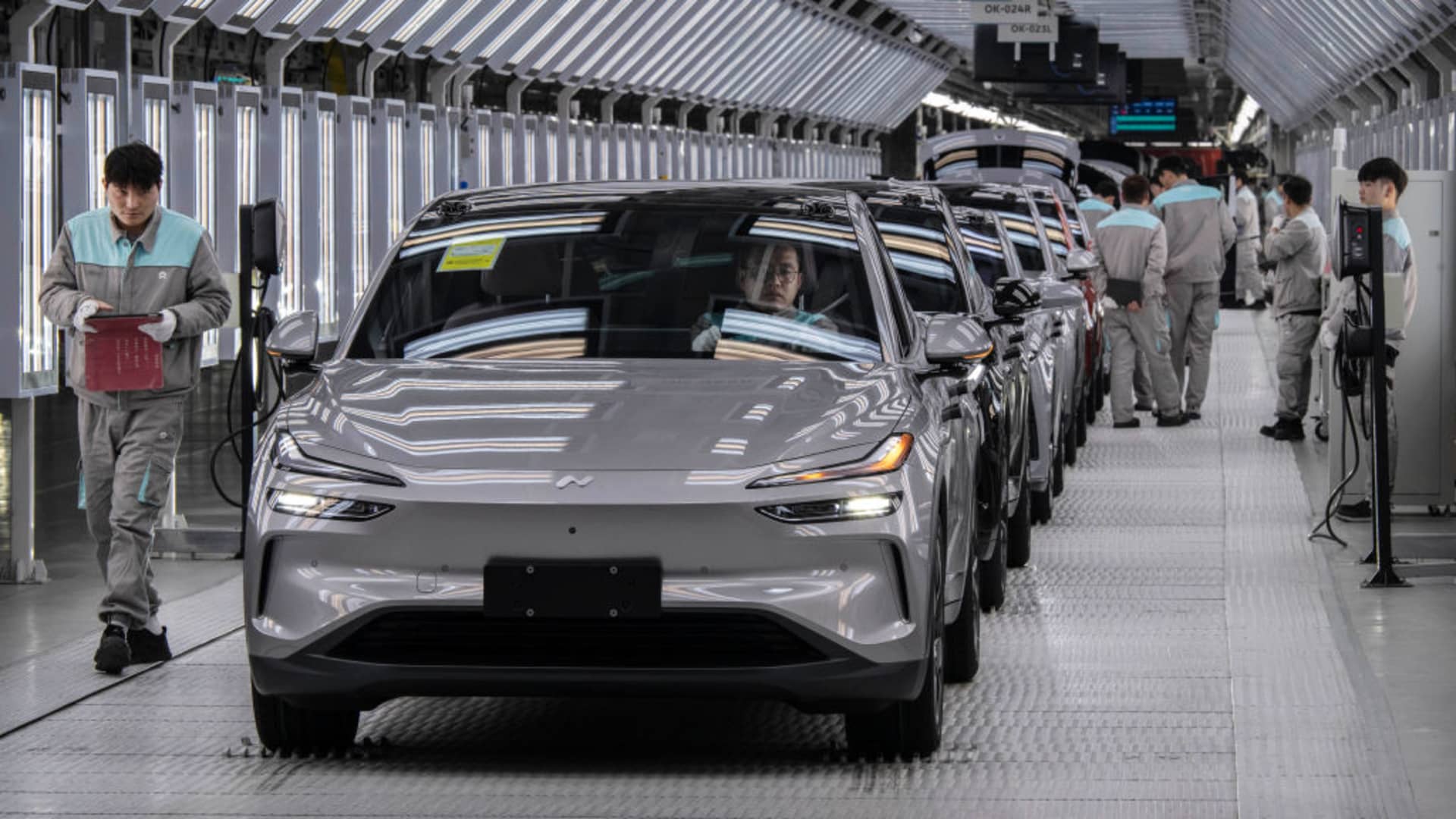
In a strategic move to revive its automotive manufacturing industry, Canada has made a significant shift in trade policy with China. The Canadian government recently announced that it will allow 49,000 Chinese-made electric vehicles (EVs) to enter the country at a reduced tariff rate of 6.1%. This decision marks a dramatic reversal from the 106% duty imposed on Chinese EVs just a few months earlier, signaling Canada’s intent to diversify its manufacturing base and reduce its heavy reliance on the United States.
While the deal on the surface seems like a victory for Canada’s auto industry, the implications are much broader, as it sets the stage for a more nuanced relationship between Canada, China, and its North American neighbors. Canada’s automotive industry has been in decline for decades, with many of its traditional manufacturing giants, especially American carmakers, cutting production in the country. The push for a more diversified and robust industry has led Canada to engage more deeply with foreign automakers, especially from China and Korea, to create joint ventures and reinvigorate local production.
Canada’s Electric Vehicle Import Policy: A Major Shift
In January 2026, Canada announced its decision to reduce tariffs on Chinese EVs, allowing 49,000 vehicles to be imported at a significantly lower tariff rate of 6.1%. This change represents a dramatic shift in policy that could change the landscape of Canada’s automotive market. With this new deal, Canada’s EV market could see a rapid increase in the availability of Chinese-made electric cars, which will now make up around 3% of Canada’s total new car market, and approximately 20% of the country’s combined battery EV and plug-in hybrid market.
In return, China has agreed to reduce tariffs on one of Canada’s top agricultural exports—canola oil. The trade agreement not only provides a boost to Canada’s agricultural sector but also establishes a framework for future cooperation between the two countries, focusing on manufacturing and clean mobility.
As part of the agreement, at least 50% of the imported Chinese EVs must be affordable models priced below 35,000 Canadian dollars (approximately $26,000 USD) within five years. This move could help make electric vehicles more accessible to Canadian consumers, potentially boosting EV adoption across the country. However, the figures represent only a small fraction of the growing EV market that is expected to explode in the coming years. With expectations that the EV market will grow significantly by 2030, Canada’s current import deal may only be a small stepping stone toward more substantial market penetration.
The Quest to Rebuild Canada’s Auto Manufacturing Sector
Beyond the importation of Chinese EVs, this trade deal is part of Canada’s broader efforts to revive its auto manufacturing sector. For years, Canada has been grappling with a slow decline in auto manufacturing, as traditional North American automakers such as General Motors, Ford, and Stellantis have scaled back production in the country. The Canadian government has been actively seeking ways to reverse this trend by offering tax incentives, subsidies, and other benefits to attract new manufacturers.
One of the key aspects of the current trade deal with China is the aim to establish joint ventures between Chinese and Canadian firms. By forming these partnerships, the Canadian government hopes to generate manufacturing jobs, strengthen its automotive supply chain, and bring cutting-edge technologies to its auto sector. These ventures could provide a much-needed boost to the industry, which has seen its share of auto manufacturing fall from over 3 million vehicles annually in 2000 to just 1.3 million in 2025.
The trade agreement also aligns with Canada’s strategy of diversifying its global relationships in light of rising tensions with the United States. For decades, Canada has relied heavily on the U.S. as its largest trading partner. However, the recent imposition of a 25% tariff on non-U.S. content in vehicles assembled in Canada has created significant friction in the North American automotive supply chain. Many Canadian automotive plants are integrated into the larger North American system, and the tariffs have disrupted this delicate balance.
The Impact of U.S. Tariffs on Canadian Manufacturing
The automotive tariffs imposed by the U.S. have had far-reaching effects on Canada’s manufacturing sector. The 25% tariff on non-U.S. content, which applies to cars assembled in Canada, has caused significant disruptions in production schedules and has led to multiple cuts in factory output. U.S.-based automakers like GM and Ford, once key players in Canada’s automotive industry, have reduced their presence significantly, with some plants in Ontario going on “operational pause” or shutting down altogether.
The reduced investment from Detroit automakers is not the only issue facing Canada’s automotive industry. The trade dispute has intensified calls for Canada to seek new manufacturing partnerships outside of North America. The country’s strategy of forging ties with Chinese and Korean automakers is seen as a step toward this goal. China, in particular, offers Canada access to the growing EV market and the potential for new joint ventures that could revive its manufacturing base.
While these partnerships hold promise, there are concerns about the long-term viability of such agreements. The cost of building manufacturing facilities in Canada is higher than in countries like Mexico, which offers cheaper labor costs. Moreover, the U.S. remains the largest market for automotive products, and the ongoing trade barriers could deter Chinese automakers from committing to full-scale production in Canada. Despite these challenges, Canada remains committed to diversifying its relationships and fostering new growth opportunities.
Challenges Ahead: Chinese Automakers in Canada
One of the most significant hurdles to the success of this trade agreement is the reluctance of Chinese automakers to commit to large-scale manufacturing in Canada. While the deal allows for the importation of Chinese vehicles, the next logical step would be the establishment of manufacturing plants in the country. However, this move is not without its challenges.
Mexico offers more attractive manufacturing conditions, with lower labor costs and proximity to the U.S. market. The U.S. also remains the primary destination for Canadian-made cars, making it a crucial player in any potential investment from foreign automakers. For Chinese automakers to establish a manufacturing presence in Canada, they would need to overcome trade barriers to the U.S. market, which could make the venture less profitable.
Moreover, Canadian politicians are aware that their country has resources that could give it an edge in the EV market. Canada possesses vast deposits of critical minerals needed for EV battery production, as well as a wealth of clean energy from hydroelectric and nuclear sources. If the country can tap into these resources and create an integrated supply chain with the U.S., it could become a major player in the electric vehicle market, not just in North America but globally.
The Role of the Canadian Vehicle Manufacturers’ Association (CVMA)
The Canadian Vehicle Manufacturers’ Association (CVMA), which represents major automakers like GM, Ford, and Stellantis, has voiced concerns about the impact of the deal with China. CVMA President Brian Kingston has expressed concerns that Chinese vehicles, which are subsidized by the Chinese government, could create unfair competition for Canadian and American manufacturers. There are also national security concerns related to the hardware and software embedded in Chinese-made vehicles, which could be a point of contention in future trade talks.
The CVMA is also wary of how Canada’s decision to reduce tariffs on Chinese vehicles will affect upcoming trade negotiations with the U.S. As the three countries prepare for a review of the United States-Mexico-Canada Agreement (USMCA) in July 2026, the trade deal with China could serve as a potential irritant in these talks. Mexico has already increased its tariffs on Chinese vehicles, which places additional pressure on Canada to balance its trade relationships with both China and the U.S.
Looking to the Future: Canada’s Automotive Strategy
As Canada continues to explore new avenues for boosting its automotive sector, its strategy of engaging with China and Korea represents a critical part of its broader vision. The goal is to create a sustainable, diversified automotive industry that can weather the challenges of international trade disputes and shifting market dynamics. While the road ahead is uncertain, Canada’s willingness to take bold steps and explore new partnerships may ultimately help it regain a foothold in the global automotive market.
In the years to come, Canada’s ability to leverage its natural resources, forge strategic partnerships, and address trade barriers with the U.S. will play a pivotal role in determining whether the country can successfully revitalize its auto manufacturing sector. The shift towards Chinese and Korean collaboration may just be the beginning of a new era for Canada’s automotive industry.