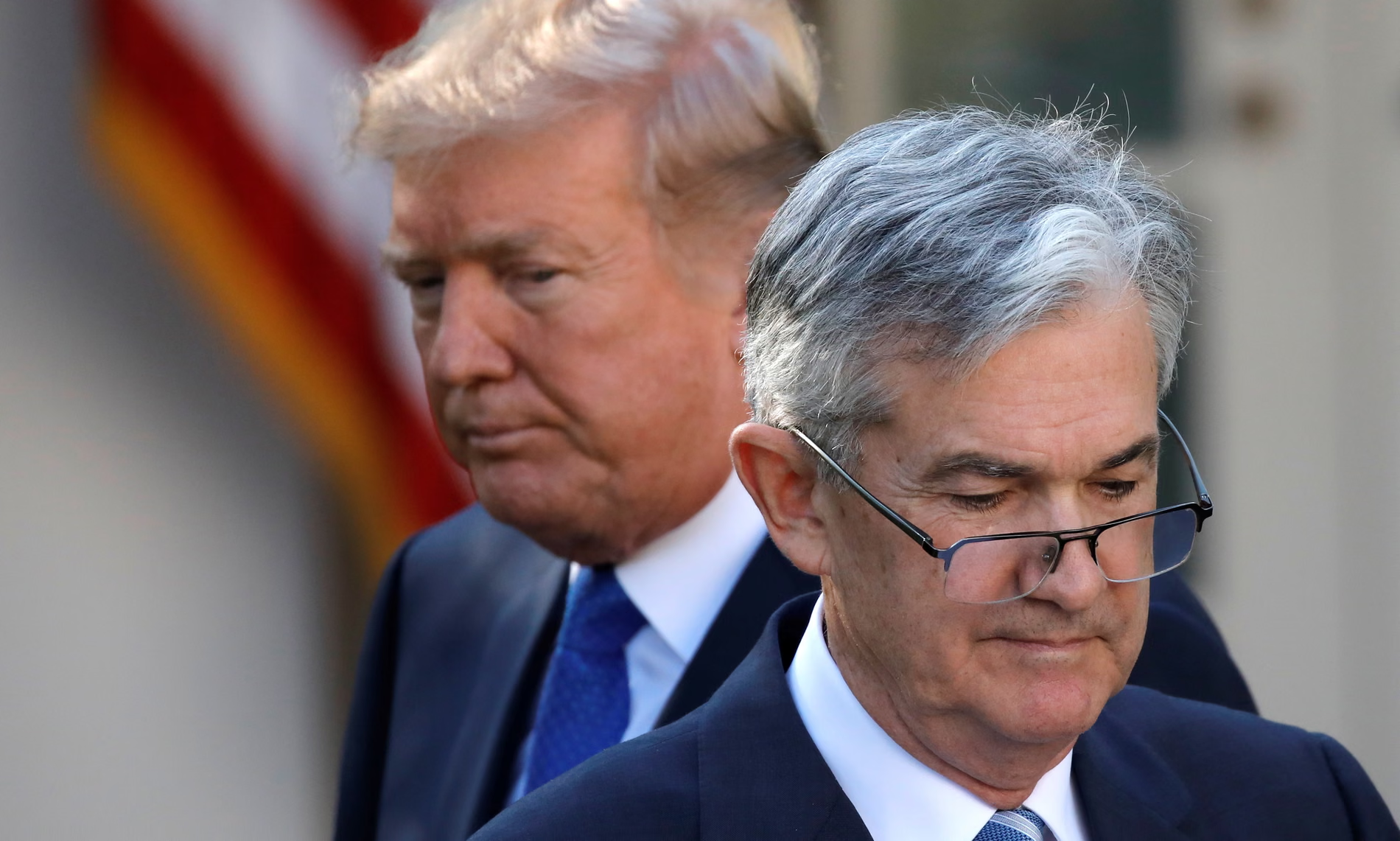
The Trump Powell indictment threat has intensified tensions between the White House and the Federal Reserve, raising fresh concerns about political influence over U.S. monetary policy. The dispute centers on Federal Reserve Chair Jerome Powell’s past testimony to Congress regarding a costly renovation project at the Fed’s Washington headquarters.
Powell has rejected the allegations, describing them as a political maneuver rather than a legitimate legal issue. He warned that the move threatens the independence of the Federal Reserve, a principle widely viewed as essential to economic stability.
Growing Pressure on the Federal Reserve
Since returning to office, President Donald Trump has repeatedly criticized the Federal Reserve for keeping interest rates higher than he prefers. He argues that lower rates would boost growth and ease financial pressure on American households.
The administration’s latest action escalates this long-running conflict. According to Powell, the Justice Department issued subpoenas related to his testimony on renovation cost overruns. While he emphasized respect for the rule of law, Powell said the investigation must be viewed in the broader context of sustained political pressure on the Fed.
Lawmakers Raise Institutional Alarm
The Trump Powell indictment threat has drawn concern from both financial experts and lawmakers. Senator Thom Tillis, a Republican member of the Senate Banking Committee, warned that the move puts the credibility of the Justice Department at risk.
He stated that he would oppose future Federal Reserve nominees until the legal issue is resolved. This response highlights the seriousness of the moment and the potential for institutional disruption.
Market Reaction Signals Unease
Financial markets reacted quickly to the news. The U.S. dollar weakened, gold prices climbed to record highs, and stock futures moved lower. Investors also priced in a slightly higher probability of near-term interest rate cuts.
These shifts reflect growing uncertainty. Market participants fear that political interference in monetary policy could weaken confidence in U.S. financial leadership.
Powell Pushes Back on Political Influence
Jerome Powell, who was appointed Fed chair by Trump in 2018, pushed back strongly against the allegations. He stated that the investigation is not about congressional oversight or building expenses.
Instead, Powell argued that the threat of indictment stems from the Federal Reserve’s refusal to set interest rates based on political demands. He emphasized that monetary policy decisions are guided by economic data and long-term stability, not short-term political goals.
Why Fed Independence Matters
Central bank independence is a core pillar of modern economic policy. It allows policymakers to focus on controlling inflation and supporting sustainable growth without political pressure.
Economists warn that undermining this independence could have lasting consequences. The Trump Powell indictment threat is therefore seen as a critical test of the U.S. financial system and its democratic safeguards.
A Defining Moment for U.S. Economic Governance
As Powell’s term as Fed chair nears its scheduled end, analysts say the confrontation could influence whether he remains in office longer than expected. The dispute also unfolds alongside other legal challenges involving Federal Reserve officials, adding to market uncertainty.
Experts describe the inquiry as one of the most serious challenges to U.S. central banking norms in decades. How the situation is resolved may shape investor confidence, institutional trust, and the future balance between politics and monetary policy.