Rising American tariffs have reshaped global trade patterns in unexpected ways, and Mexico has emerged as a clear beneficiary. When President Donald Trump began increasing tariffs earlier this year, many economists warned that Mexico’s export-led economy would suffer heavy losses. Instead, exports from Mexico to the United States have surged, defying early predictions and highlighting how uneven tariff policies can redirect global supply chains.
Initially, policymakers feared higher trade barriers would weaken demand and slow factory output. However, as final tariff rates became clearer, Mexico’s position improved. Because its effective tariff rate remained lower than that imposed on many other countries, Mexican goods gained a competitive edge. As a result, U.S. importers shifted sourcing decisions rapidly, turning to Mexico to replace products that had become more expensive under higher duties.
At the same time, companies were already rethinking supply chains after years of disruption. Mexico’s proximity, established manufacturing base, and trade framework made it an attractive alternative. Consequently, rising American tariffs accelerated trends already underway, strengthening Mexico’s role within North American trade.
How rising American tariffs redirected supply chains
Trade policies rarely affect all partners equally, and rising American tariffs demonstrate this clearly. Higher duties on goods from China and other nations altered price dynamics across the market. Faced with higher import costs, U.S. companies searched for suppliers that could offer stability without eroding margins.
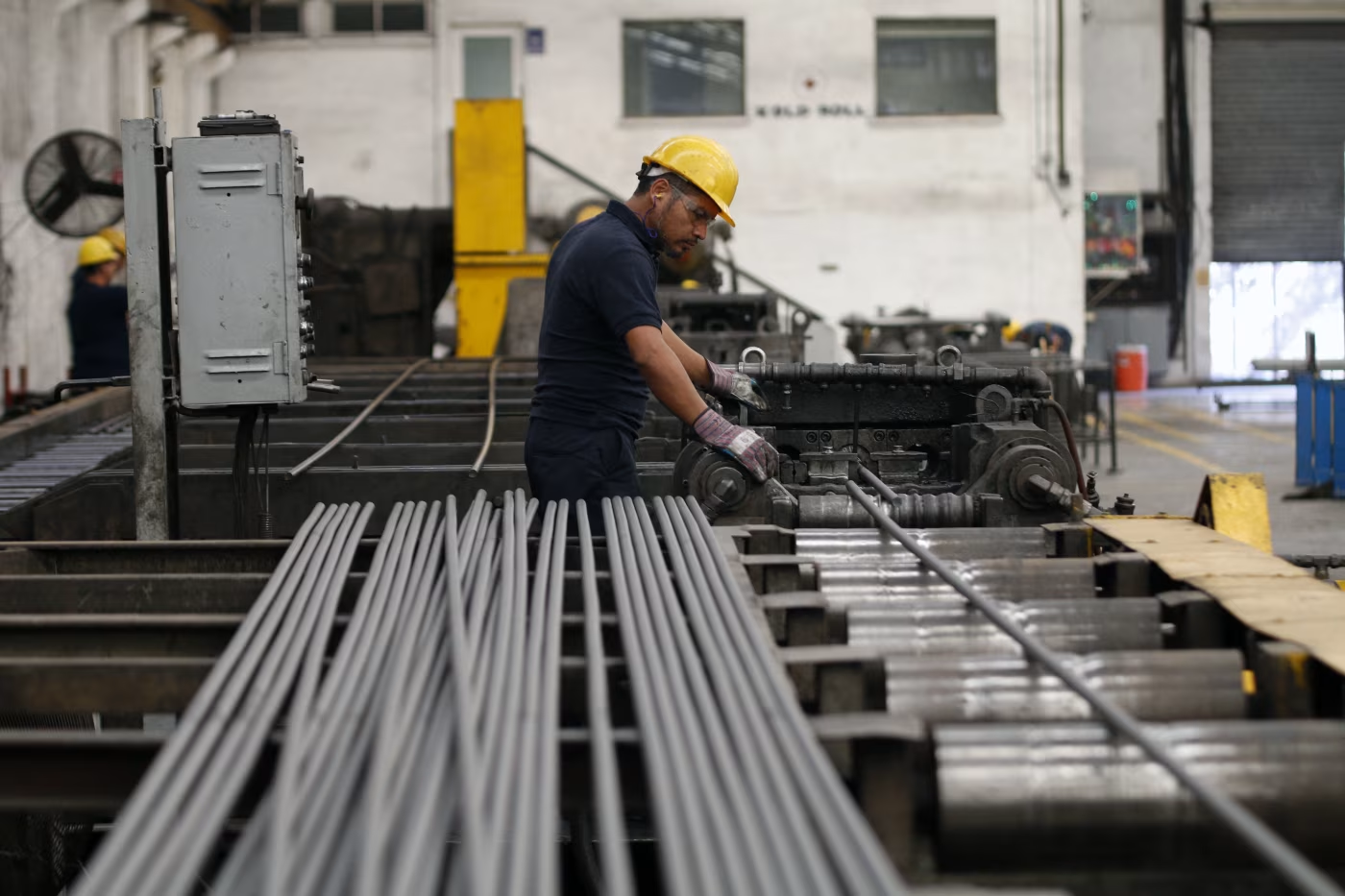
Mexico was well positioned to respond. Manufacturers expanded capacity in sectors such as automotive components, electronics, and industrial goods. Moreover, existing trade rules simplified cross-border operations, allowing firms to pivot quickly. Therefore, rising American tariffs did not simply reduce imports; they reshaped where those imports originated.
This redirection explains why Mexican exports increased even as broader global trade faced uncertainty. It also shows how relative tariff differences can matter more than headline policy announcements.
Mexico’s export performance exceeds expectations
At the beginning of the year, forecasts for Mexico were cautious. Analysts anticipated layoffs and slower growth if U.S. demand weakened. Instead, export data showed steady gains, particularly in shipments bound for American markets. This outcome surprised economists who had modeled more severe impacts from protectionist policies.
Several factors supported this resilience. First, Mexico’s lower tariff exposure delivered immediate cost advantages. Second, firms already operating in Mexico scaled up production rather than relocating again. Third, nearshoring trends attracted fresh investment, reinforcing export momentum. Together, these forces enabled Mexico to capture market share previously dominated by higher-tariff suppliers.
As rising American tariffs continued to influence sourcing decisions, Mexican producers filled gaps left by costlier imports, turning potential risk into opportunity.
Read Also
Outgoing Walmart CEO profile
Trump and Marjorie Taylor Greene political tensions
Inside the Trump–Marjorie Greene feud
Why tariff disparities shape winners and losers
Public debate often focuses on whether tariffs are high or low, yet disparities between countries frequently matter more. Rising American tariffs applied unevenly created clear winners and losers based on relative exposure. Mexico’s experience illustrates how being less affected can translate into tangible gains.
For U.S. businesses, the logic was simple. When one supplier became more expensive, alternatives that preserved reliability and cost efficiency gained appeal. Mexico offered geographic proximity, familiar standards, and logistical advantages. Consequently, even modest tariff gaps shifted significant trade volumes.
This dynamic underscores a broader lesson. Trade policy interacts with complex supply networks, and companies respond quickly to incentives embedded within tariff structures.
Broader implications for North American trade
Mexico’s export surge carries wider implications for regional economic ties. Stronger trade flows deepen integration, support employment, and encourage investment across borders. For Mexico, higher exports strengthen growth prospects. For the United States, diversified sourcing reduces dependence on distant suppliers and shortens delivery timelines.
However, closer integration also raises policy considerations. Governments must balance protective measures with the realities of interconnected markets. Rising American tariffs may aim to shield domestic industries, yet they can also reinforce regional partnerships.
As long as tariff structures continue to favor nearshoring, Mexico’s position as a key U.S. supplier appears secure. The unexpected outcome of recent trade policies shows how quickly economic winners can emerge under shifting global conditions.