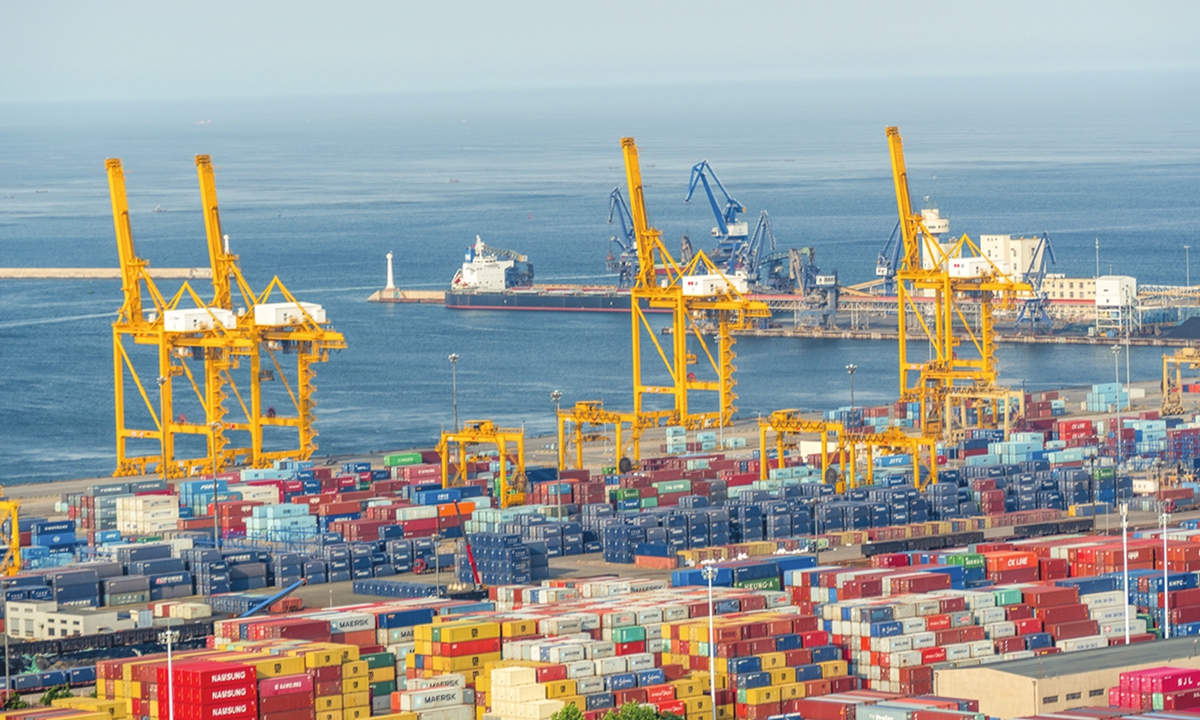
China has reached a historic milestone, surpassing a $1 trillion trade surplus for the first time in 2025. This massive surplus is indicative of China’s growing dominance in global trade, propelled by a surge in high-tech exports and a continued shift toward manufacturing innovation. However, experts warn that this record surplus, fueled by an undervalued renminbi, may not be sustainable in the long term. In light of this, there is growing support for a gradual appreciation of China’s currency, which could help balance the economy, boost imports, and ease rising protectionist sentiments abroad.
China’s Unprecedented Trade Surplus
According to recent data, China’s merchandise trade surplus reached $1.08 trillion by November 2025, a 22.1% increase from the same period in 2024. This milestone is remarkable, considering that global trade has been marked by turbulence, from rising tariffs to global economic slowdowns. Despite these challenges, China’s exports have seen a steady increase, largely driven by its rapidly expanding high-tech sector. The latest figures suggest a potential full-year surplus of around $1.23 trillion, which would be equivalent to just over 1% of global GDP.
This surplus is a significant achievement for China, especially when compared to historical precedents. Notably, it is poised to become one of the largest surpluses as a percentage of global GDP in recent memory—on par with the extraordinary surpluses recorded by the United States during World War II. This highlights how China’s position in the global economy has evolved, with a rapidly expanding footprint in high-tech industries and new export markets.
High-Tech Exports Driving Growth
One of the key factors behind China’s rising trade surplus is the sharp increase in high-tech exports. Chinese companies have made significant inroads in sectors like electric vehicles (EVs), semiconductors, and shipbuilding, capturing market share from traditional global leaders. Notably, China has become the world’s largest exporter of cars, surpassing Japan, with EVs playing a crucial role in this surge. By 2026, China is expected to export around 8 million cars, up from over 6 million in 2025.
Similarly, China’s semiconductor exports grew by nearly 25% in the first 11 months of 2025, as the country has become a key player in manufacturing legacy chips. While it still lags behind the U.S. in advanced semiconductor technologies, China is rapidly closing the gap in the less complex chips used in consumer electronics, appliances, and medical devices.
In shipbuilding, China’s dominance continues to grow, with exports of ships up by 26.8% in the same period. Chinese manufacturers are now leading the global market, thanks to their technological advances and the competitive pricing of their products.
These developments underscore China’s increasing competitiveness in high-tech industries, which have long been dominated by Western powers. Chinese manufacturers are able to offer innovative solutions at lower costs, making them an attractive alternative in global markets.
Impact of U.S. Tariffs and Trade Diversification
Despite the ongoing trade war with the U.S., which has imposed tariffs of up to 50% on Chinese imports, China’s trade performance has remained robust. The tariffs have certainly impacted exports to the U.S., with a notable decline in trade with the country—down 18.9% in the first 11 months of 2025. However, China has managed to offset this decline by increasing its exports to other regions, particularly the European Union and the Global South, including Southeast Asia and Africa.
The diversification of China’s export markets has been critical in maintaining overall trade growth. The EU, in particular, has seen an 8.1% increase in imports from China, driven by high-tech products like smartphones, machinery, and medical equipment. Similarly, the ASEAN countries and African nations continue to be bright spots for Chinese exports, offering new growth opportunities.
These developments demonstrate China’s ability to adapt to global trade shifts and mitigate the impact of tariffs and other protectionist measures, showing its growing dominance in the global market.
Imports Remain Stagnant: The Role of the Undervalued Renminbi
Despite its success in exports, China’s imports have remained largely stagnant, down by 0.6% in the first 11 months of 2025. This stagnation is partly due to the country’s increasing ability to meet domestic demand with its own products. Chinese brands, particularly in sectors like automobiles, are now outpacing foreign competitors, further reducing the need for imports.
However, a major factor contributing to the stagnant import growth is the undervaluation of the renminbi. The Chinese currency has been held artificially low, making imports more expensive for domestic consumers and businesses. While this has helped China’s export competitiveness, it has also led to an imbalance in trade. The country is accumulating an enormous surplus while struggling to stimulate domestic demand for foreign goods.
The Case for Renminbi Appreciation
As China’s manufacturing sector continues to thrive, many experts argue that the time has come for the renminbi to appreciate. The currency’s undervaluation is seen as unsustainable in the long term, as it distorts trade balances and exacerbates tensions with trading partners. Miao Yanliang, chief strategist at China International Capital Corp, argues that the Chinese government should allow the renminbi to appreciate gradually by at least 50% over the next five years. This would help balance China’s trade surplus and boost imports, which would benefit global markets as well.
A stronger renminbi would also help ease the pressure on China’s trading partners, particularly in Europe and the U.S., which are increasingly concerned about losing market share to Chinese products. By allowing the renminbi to rise, China could help promote fairer competition and reduce the risk of escalating protectionism globally.
A Shift in China’s Trade Strategy
China’s record trade surplus, driven by high-tech exports and a competitive manufacturing sector, reflects the country’s growing influence in the global economy. However, the trade imbalance and stagnant imports signal that the current economic model is unsustainable in the long term. Allowing the renminbi to appreciate could provide a more balanced approach, boosting domestic demand for foreign goods and helping China’s trading partners regain competitiveness.
As China continues to evolve into a global economic powerhouse, these shifts in its trade and currency policy will be closely watched by the international community. How China addresses its trade surplus and the undervaluation of the renminbi could define its future role in the global economy and influence trade relations for years to come.