World leaders at Davos highlight stability, reform and future-ready growth
The World Economic Forum (WEF) in Switzerland sent a clear message: global growth remains resilient despite political noise and trade disputes. Leaders in Davos noted that the world economy is holding up better than expected. Even with new tariff threats and geopolitical tensions, the global system appears adaptable.
Officials from the IMF, ECB, and WTO agreed that international trade and investment flows continue to move forward. These systems persist even when governments clash over power.
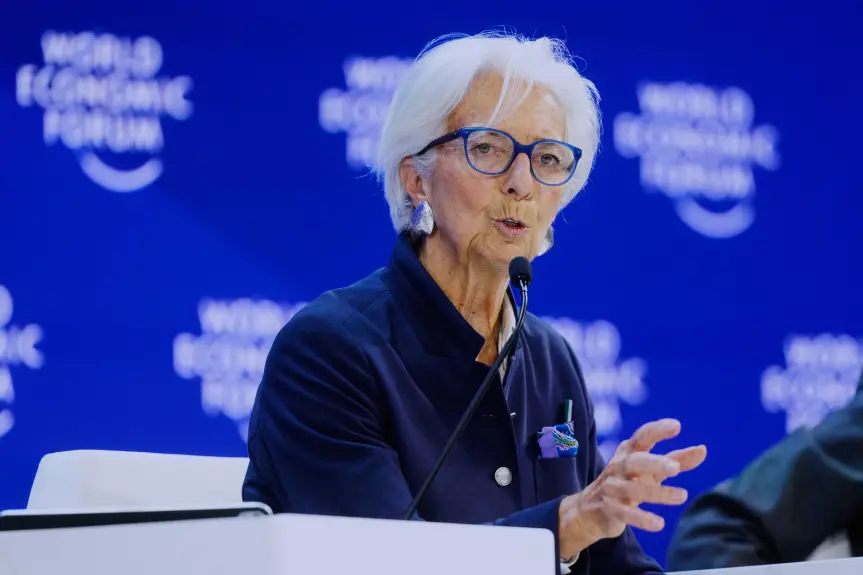
European Central Bank President Christine Lagarde urged Europe to modernize its economy now. She recommended encouraging innovation and improving the business climate to lift productivity. Lagarde argued that leaders should view external criticism as motivation for reform.
IMF Managing Director Kristalina Georgieva warned that 2026 growth forecasts remain insufficient to reduce heavy government debt. She urged policymakers to focus on economic plans that protect the vulnerable.
While U.S. tariff threats recently rattled markets, WTO chief Ngozi Okonjo-Iweala remains confident. She noted that long-standing rules still govern over 70% of international trade. This framework ensures that countries receive equal treatment despite political shifts.
Artificial intelligence was a major focus for leaders at the forum. While AI can drive efficiency, leaders warned that it requires careful management. The goal is to prevent job displacement and rising inequality. Governments must ensure that innovation supports workers instead of replacing them.