Australia’s Australia social media ban takes effect on December 10, 2025. It bans children under 16 from holding accounts on Instagram, TikTok, YouTube, Snapchat, and Facebook. In recent days, Meta and other tech firms have started deactivating underage accounts. As a result, this has become one of the world’s strictest youth online safety measures.
The law stems from the Online Safety Amendment (Social Media Minimum Age) Bill 2024. Parliament passed it exactly one year ago. Unlike previous approaches, it places full enforcement responsibility on social media companies. Consequently, platforms that fail to comply can be fined up to AU$49.5 million (~$33 million).
Meta began disabling under-16 accounts on Instagram, Facebook, and Threads on December 4. Meanwhile, other platforms—such as TikTok, X, Reddit, Twitch, and Snapchat—have warned young users. They urge them to download photos and contacts before accounts are removed. Additionally, users can freeze accounts until they turn 16. Importantly, children and parents won’t face any penalties.
This law is already drawing global attention. Denmark, the EU, Malaysia, and India are now considering similar rules. Julie Inman Grant, Australia’s eSafety Commissioner, called it “the first domino” in curbing big tech’s influence on kids. She noted that even adults struggle with addictive app designs. “What chance do our children have?” she asked.
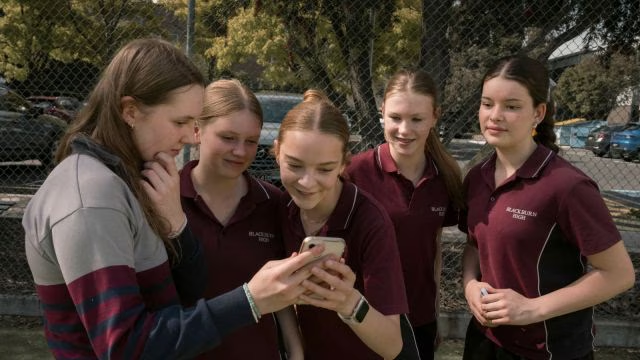
The ban aims to protect teens from cyberbullying, anxiety, peer pressure, and online predators. Over 960,000 Australian teens under 16 use social media. About 350,000 are on Instagram. Officials emphasize this is a “delay,” not a permanent ban—similar to age limits for driving or alcohol.
Still, many teens oppose the rule. According to a national ABC survey, three-quarters of 9- to 16-year-olds plan to keep using social media. In response, downloads of alternative apps have surged. Moreover, two 15-year-olds in New South Wales filed a legal challenge. They argue the law violates their right to free expression.
Initially, tech companies criticized the law as rushed and poorly designed. They warned that removing teens would cut off access to safety tools like parental controls. However, all major platforms now say they will comply. To identify underage users, they’re using behavioral signals—such as activity during school hours or interactions with other minors.
Not all apps fall under the ban. Messaging and gaming platforms—including WhatsApp, Discord, Messenger, Roblox, Pinterest, and YouTube Kids—are currently exempt. That said, regulators may add more services in the future based on usage patterns.
The law also includes a key privacy safeguard. Platforms cannot require government ID as the only method to verify age. This addresses concerns about data collection. Under-16 users can still view public posts without an account. At the same time, they’ll avoid addictive features like algorithmic feeds and push notifications.
With significant fines in place and close global scrutiny, the Australia social media ban could set a powerful precedent. If successful, other countries may follow Australia’s lead in protecting children online.
READ: Call of Duty: Black Ops 7 — Everything to Know About the New Cold War Thriller