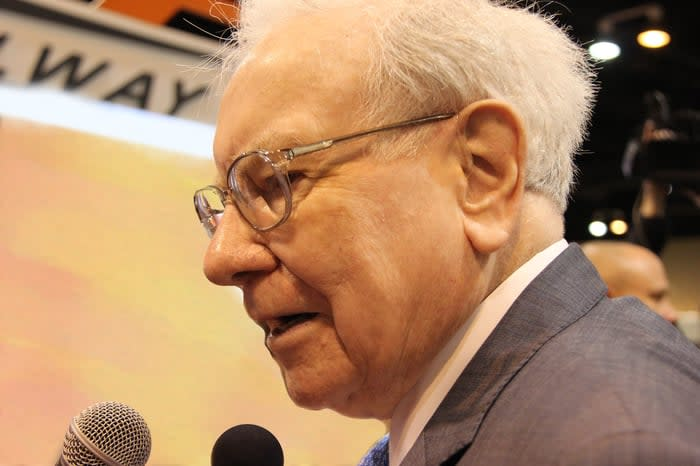
Warren Buffett, the legendary investor behind Berkshire Hathaway, has always been an influential figure in the world of investing. With nearly 60 years of success, Buffett’s guidance has helped countless individuals and institutions navigate the stock market. Yet, as he nears retirement, his recent decisions offer a veiled warning that could shape how investors approach their portfolios in 2026. Before stepping away, Buffett made strategic moves that should give pause to anyone tracking the market.
Warren Buffett’s Final Investment Moves: A Look at Key Decisions
In 2025, Warren Buffett’s Berkshire Hathaway made significant changes to its investment strategy. While the market continues its bullish trend, some of Buffett’s recent moves hint that he believes caution is needed. Let’s break down these crucial decisions and explore their implications for investors moving forward.
1. Berkshire Hathaway Exits S&P 500 ETFs
For years, Buffett has championed the idea of investing in low-cost, passive S&P 500 index funds, a strategy that has proven effective over the long term. Yet, in a surprising turn of events, Berkshire Hathaway sold off its stakes in two prominent S&P 500 exchange-traded funds (ETFs): the Vanguard S&P 500 ETF (VOO) and the SPDR S&P 500 ETF (SPY) in the fourth quarter of 2024. This marks a notable shift in Buffett’s strategy, signaling that the famed investor might be concerned about the current market’s long-term sustainability.
2. A Steady Stream of Stock Sales
Buffett has never been one for short-term trading, but in the past two years, Berkshire has become a consistent seller of stocks. Notable positions, including those in Citigroup, Apple, and Bank of America, were trimmed or completely sold. In total, Berkshire has sold $184 billion worth of stocks since the end of 2022. While Buffett’s long-term holdings have traditionally made up a substantial portion of Berkshire’s portfolio, his recent actions suggest he sees better opportunities elsewhere or perhaps anticipates market correction.
3. Berkshire’s Record Cash Reserves
One of the most striking aspects of Berkshire Hathaway’s portfolio is its massive cash reserve. At the close of the third quarter of 2025, the company reported a record $382 billion in cash and short-term investments. In a time when the market is seeing rapid gains, Buffett has opted to accumulate cash, possibly as a safeguard against future market volatility. By not fully participating in the market’s euphoric rise, Buffett seems to be waiting for more attractive opportunities.
What Does Buffett’s Strategy Mean for Investors?
Buffett’s actions are a clear indication that he is not fully on board with the current state of the market. As a value investor, he has always sought out undervalued stocks, and right now, he seems to be waiting for a correction before making any significant investments. For those looking to follow Buffett’s lead, the key takeaway is to accumulate cash and remain patient, awaiting opportunities to buy quality stocks at reasonable prices.
While Buffett has been cautious in the face of a market bolstered by artificial intelligence enthusiasm, investors should remember that he’s always maintained a long-term focus. The current stock market boom might seem promising, but as expectations rise, so does the likelihood of a correction.
Should You Follow Buffett’s Lead?
As for buying shares of Berkshire Hathaway right now, it’s important to consider Buffett’s own stance. Given the company’s recent selling activity and the increasing cash pile, Berkshire Hathaway is currently not positioned for major growth in the short term. While Berkshire has made small moves, such as buying positions in UnitedHealth Group and Alphabet, these moves are modest compared to their usual acquisitions. Instead, Berkshire seems content to sit on its cash reserves and wait for more favorable conditions.
In conclusion, Warren Buffett’s recent moves suggest a more cautious outlook for the market in 2026. While the stock market continues to perform well, Buffett’s decision to sell off large positions, exit passive ETFs, and hoard cash indicates he might be anticipating a correction. As investors, it’s worth considering whether following Buffett’s approach—accumulating cash and waiting for solid, reasonably priced investments—might be the best strategy for the year ahead.