NASA, the U.S. Space Force, and leading research institutions are accelerating breakthroughs in aerospace engineering through a new generation of space technologies and materials. Recent developments include NASA’s creation of a high-temperature superalloy known as GRX-810, the Space Force’s adoption of the ATLAS system for orbital tracking, and academic progress in electric and hybrid-electric aircraft architectures. Because the aerospace sector relies on stronger materials, smarter monitoring systems, and cleaner propulsion methods, these innovations mark a major turning point for the future of global aviation and deep-space exploration.
NASA’s GRX-810 Superalloy Sets a New Standard for High-Temperature Performance
NASA’s newly developed GRX-810 superalloy is considered one of the most significant advancements in aerospace materials in decades. Designed to withstand extreme heat, mechanical stress, and prolonged operational wear, GRX-810 uses oxide-dispersion strengthening to achieve extraordinary endurance.
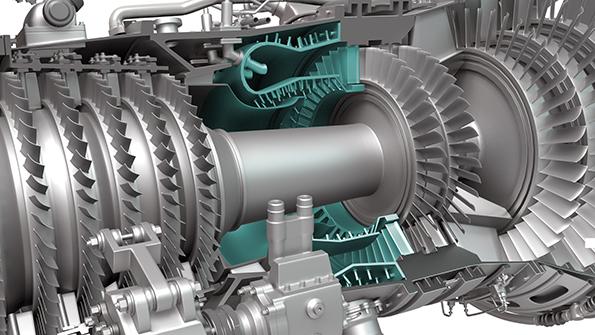
The alloy maintains strength at temperatures exceeding those tolerated by conventional aerospace metals, giving engineers new options for turbine blades, rocket engines, and hypersonic vehicles. GRX-810 can also survive more than 1,000 times the life cycles of existing nickel-based components. This durability allows designers to build engines that run hotter, last longer, and operate more efficiently. Because higher engine temperatures translate to lower fuel consumption and greater performance, GRX-810 could reshape next-generation propulsion and significantly reduce operational costs.
Space Force Adopts ATLAS for Stronger Space Domain Awareness
In a major milestone for national security, the U.S. Space Force has formally accepted the ATLAS (Advanced Tracking and Launch Analysis System). ATLAS strengthens America’s space domain awareness by tracking satellites, debris, and launch activities in real time.
The system compiles vast data streams to determine object trajectories, detect anomalies, and predict potential collision risks. As Earth’s orbit becomes more crowded with new commercial satellites, military assets, and private spacecraft, ATLAS offers the precision needed to monitor and protect essential orbital infrastructure.
Because reliable tracking improves safety for every operator in space, ATLAS plays a critical role in reducing the growing hazards of orbital traffic and debris.
Research Pushes Electric and Hybrid-Electric Aviation Forward
Academic institutions are also making progress in electric and hybrid-electric aircraft architectures. These designs reduce emissions, lower noise levels, and support new aircraft configurations that traditional engines could not achieve.
Researchers are exploring distributed electric propulsion, advanced battery systems, and fuel-cell integration. These technologies could allow small and mid-sized aircraft to operate with far lower fuel consumption. Hybrid-electric engines may serve as transitional systems, combining traditional turbine reliability with electric-powered efficiency.
As global aviation faces mounting pressure to cut carbon emissions, these innovations offer a direct path toward cleaner, more sustainable aerospace operations.
A Convergence of Technology Transforming Space and Aviation
Together, GRX-810, ATLAS, and hybrid-electric propulsion research show how aerospace innovation is entering a new phase. Stronger metals make engines more capable. Smarter tracking systems make orbit safer. Cleaner propulsion reshapes how aircraft are built and flown.
Each advancement supports the next. Stronger alloys improve electric engine components. Better tracking enables safer deployment of new spacecraft. Rising demand for sustainability fuels new research into efficient propulsion.
These developments create a foundation for the next generation of space missions, commercial aviation breakthroughs, and defense capabilities. As agencies and researchers collaborate, the aerospace industry is preparing for an era defined by long-range missions, environmentally responsible flight, and advanced materials that expand engineering possibilities.